Language careers
Interpreting and translation careers: try a venue-change exercise
Compare written translation and live interpreting through a fictional venue change. Practise asking for clarification and conveying uncertainty.
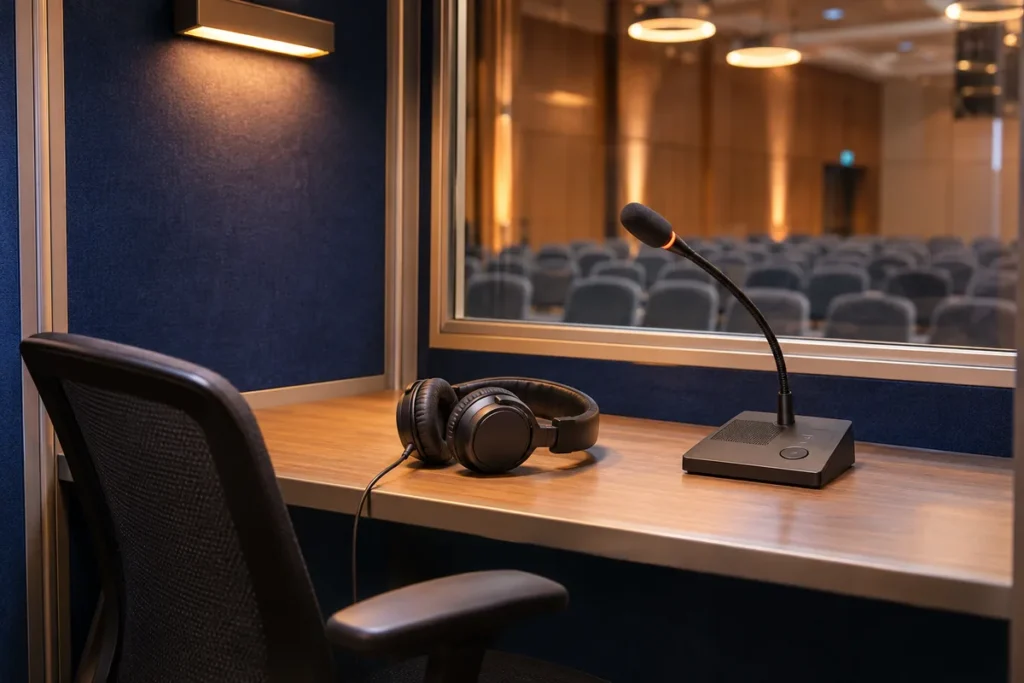
If you enjoy working across languages, investigate what you would actually deliver. A translator might revise a written venue guide before it goes to print. An interpreter might convey a speaker’s message during a live conversation. Both need careful listening or reading, and the timing changes which questions they can ask and when.
This guide uses US occupational and professional references, plus a fictional community-event exercise. You can try the exercise in a single language. It explores how you handle uncertainty and leaves language proficiency and professional competence to the appropriate assessment.
Compare the work by what people need from you
The US Bureau of Labor Statistics profile distinguishes interpreting, which works with spoken or signed communication, from translation, which works with written material. It describes varied settings and work schedules. Explore written assignments with revision time separately from live work, where people may need a message immediately.
In a translation vacancy, ask what kind of material you would handle, who reviews it, and which changes you can request from the author. In an interpreting vacancy, ask about the setting, when you receive preparation material and how the team handles requests for clarification. Some jobs combine tasks. Ask which tasks take up most of a typical week.
The American Translators Association’s code of ethics addresses accurate communication with attention to audience, purpose and context, alongside confidentiality. Use it to identify questions about assignments and review. It is a professional association’s code for its members.
Try a fictional venue-change exercise
A community centre runs a Saturday book swap. The organiser asks for a written venue update in another language and for help conveying an announcement at the event. The venue and all messages below are invented.
- The approved printed notice says doors open at 10 a.m. and gives the north entrance.
- A newer draft says, “Use the side door after ten.” The draft has no approval note and the building has two side doors.
- In rehearsal, the presenter says, “The north entrance might be closed until we hear back.” They have yet to confirm an alternative.
Write two short notes. For the written update, send the organiser one question that would let you finish the copy without guessing. For the live rehearsal, identify the exact uncertainty the audience needs to hear and who can clarify the entrance. You can write both notes in English or another language you already use.
Compare your notes with a worked response
Written update: “The approved notice names the north entrance. The new draft says ‘side door’. Which entrance should appear in the final version, and is it open from 10 a.m. or only later?” Hold the conflicting change for review. Keep the approved schedule separate from the draft while you wait.
Live rehearsal: Convey that the north entrance might be closed, and that the venue team is still checking. Ask the presenter or organiser to clarify any disputed direction through the agreed procedure. Substituting a specific door would create information the speaker did not give.
Compare what each task asked of you. In the written work, you could pause a disputed line and ask for an approved revision. In the rehearsal, you needed to preserve the uncertainty in what people heard. Which part would you want to practise again, and who could give you useful feedback?
Choose material for a language work sample
A useful sample shows the decisions you can explain. Start with a short brief you write yourself, or use material you have permission to share. Removing a client’s name may leave details that identify the assignment or its participants. If you cannot establish what you may share, build a fictional sample and label it clearly.
Try a fictional label for an exhibition. The first line has to tell visitors that a lift is out of service. The second line has to direct them to staff who can explain the alternative route. Keep the route itself out of the sample if the fictional brief has not supplied it.
Make two versions for different uses, such as a sign a visitor can scan quickly and a short staff briefing. Alongside each version, explain one decision about the audience and one piece of information you would check before release. If you work in one language for this exercise, call it a writing or revision sample. You can still show how you handle meaning and uncertainty.
Read two sample versions
Visitor sign
Lift out of service. Ask a member of staff about the alternative route.
Staff briefing
The exhibition lift is out of service. Confirm the alternative route with the venue lead before giving visitors directions.
The sign gives visitors an immediate next step. The briefing gives staff one fact to verify. Before release, check who will answer visitors’ questions and where that person will be. In your portfolio, include the fictional brief, both versions and a short note explaining the decision you made for each audience.
The US O*NET profile for Interpreters and Translators lists protecting confidential information among the occupation’s tasks. Use the work-sample guide to make your own contribution and the limits of a fictional exercise clear.
Choose one opportunity to investigate
Pick one vacancy, freelance brief or programme in the place you intend to work. Record the language pair and direction, subject matter, delivery format, review arrangement and preparation time. For contract work, check whether the stated fee includes preparation and revisions. If a credential is named, verify the exact requirement with the employer or relevant authority before paying for training.
Ask for an anonymised sample brief or an observation opportunity the organisation can share. Use your own fictional material for practice. Check what a course actually assesses and ask who gives feedback in your language pair. Career360’s course-selection guide has a message you can adapt for providers.
For a second practice task, open the written revision exercise on the US Interpreters and Translators profile. Follow one date change across a poster and an email, then decide what you would ask before updating the shared terminology. This lets you practise checking consistency across documents after working through the live announcement above.
Sources and scope
The linked US BLS profile supports the occupational distinctions and broad working context. The ATA code supplies a professional reference on accurate communication and confidentiality. Sources checked on 20 November 2026. The venue scenario and worked notes are original AI-assisted Career360 editorial material. This guide does not establish licensing, credential recognition or professional readiness in any jurisdiction.
AI-assisted Career360 editorial guidance with a fictional venue exercise and scoped US references.