The work in context
Career overview
Radiologic technologists in the United States help patients through imaging exams and produce images for the clinical team. If you are comparing radiography with sonography, look at how each role spends its time with patients, what the equipment does, and what a trainee needs to demonstrate on placement.
Picture the working day
A radiographer may explain an X-ray procedure, help a patient into position, operate the equipment and check the resulting images for technical quality. The O*NET task profile also covers keeping records and working with other healthcare staff. Ask someone in the department to describe the steps between meeting a patient and handing the images over.
The US Bureau of Labor Statistics overview describes several work settings and notes the possibility of evening, weekend or overnight work. A hospital rota and an outpatient clinic schedule can give you very different days. Ask how staff divide scheduled and urgent exams, how often they help people who have difficulty moving and who is available to support a new colleague.
Try explaining the next step in plain language
In a fictional radiography class, a classmate plays someone who has never had an X-ray. The tutor is present. The classmate says, “I can’t hear you when you turn away, and I’m worried you’ll ask me to move before I’m ready.” A draft reply says, “We’ll position you and proceed with the exam. The radiologist will interpret the images.”
Rewrite the reply in two or three short sentences. Make one practical change so the person can follow you. Explain when you’ll give the next instruction and ask a question that lets them tell you what would help. Describe only the communication you can control in this classroom exercise.
Compare your explanation with a worked example
“I’ll face you when I speak and explain the next step before asking you to move. If anything is unclear, tell me and I’ll pause. What would make it easier to follow what I’m saying?”
The reply offers something the student can actually do. It also gives the other person a way to ask for a pause or explain what helps them hear. Try saying your version aloud. At a programme visit, ask how tutors give feedback when trainees need to explain a procedure simply and adapt to the person in front of them.
Check what a programme prepares you to do
The Bureau of Labor Statistics identifies an associate degree as the typical US entry-level education for radiologic and MRI technologists. When comparing programmes, ask for the radiography pathway and its clinical calendar. A programme may mention CT or MRI in its overview. Ask which modality you will practise under supervision and which, if any, is taught as a separate pathway.
Before paying a deposit, ask the programme which graduation requirements and clinical competencies are documented for your cohort. The BLS overview explains that licensure and certification requirements vary by state. Ask the programme which credential it prepares graduates to seek, confirm the current eligibility requirements with the credentialing organisation, and check the rules with the state regulator where you intend to work. Ask the employer what it requires for the specific vacancy.
Sources and scope. BLS and O*NET describe US occupational patterns. Credential eligibility depends on the programme, credential and location. Career360 used AI assistance to prepare and edit this profile. The dialogue is fictional and focuses on communication in a classroom.
01 / The work
Working life
Radiologic technologists prepare patients for imaging procedures, operate equipment, check images for technical quality and keep records. Scheduled and urgent work, shift patterns and support for new staff vary by department.
Put your research into practice
Explore this career in practice
Use these editorial guides to investigate the work and plan your next questions. They do not establish local entry requirements or add reviewed evidence for your selected country.
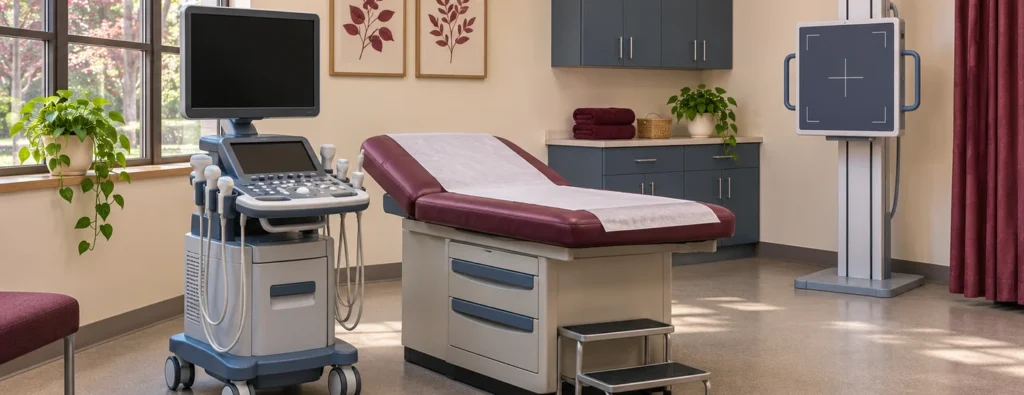
Medical imaging careers
Sonography or radiography? Compare the work and clinical placements
Compare day-to-day work in two US imaging careers, then use a fictional placement timetable to check travel, lost work hours and questions to ask before enrolling.
Read the guide : Sonography or radiography? Compare the work and clinical placements02 / Finding your route
Entry routes
BLS lists an associate degree as typical for US radiologic and MRI technologists. Verify the named radiography pathway, placement schedule, credential eligibility and state requirements before enrolling.
The skills behind the work
Career-specific skill evidence
Explore reviewed occupation observations for your selected country. These ratings describe work, rather than your personal proficiency or legal entry requirements.
No reviewed career-specific skill observations are available for United States of America yet. Broader occupation-group skills do not establish local career coverage.
Understand the earning context
Salary evidence
United States of America · Observations describe the stated occupation and period. They are not starting salaries, experience tiers or individual predictions.
United States of America · United States (national)
U.S. wage and salary employees classified as radiologic technologists and technicians.
May 2025
| Measure | Amount |
|---|---|
| Median | USD 80,110.00 |
| 10th percentile | USD 55,980.00 |
| 90th percentile | USD 118,660.00 |
Methodology and applicability
2018 US SOC 29-2034 · May 2025 OEWS
Observation year: 2025
May 2025 U.S. national occupational employee wage estimates. Gross straight-time wages exclude overtime premiums, shift differentials and employer benefit costs. Self-employed workers are outside the OEWS population. Percentiles describe the wage distribution. Actual pay depends on working hours and role, location and employer. See https://www.bls.gov/opub/hom/oews/concepts.htm
This estimate applies to the US radiologic technologist profile and BLS population 29-2034. Excludes MRI technologists, the combined radiologic-and-MRI wage estimate, and other careers within the ISCO group.
Applicability reference ↗A local perspective
Entry guidance where you live.
Start with the source for your country and jurisdiction. Entry routes, registration and ongoing requirements can differ.
No reviewed source overview is available here for United States of America yet. This career introduction does not establish local qualification requirements.
Prepare your next step
Learning options for this career.
Explore reviewed programmes in their stated country and jurisdiction. A learning option is not a guarantee of admission, proficiency, licensure or employment.
No reviewed career-specific learning options are available for this country on this page. Broader skill links do not establish entry-route approval.
Where this work happens
Explore reviewed industry connections for this exact career or occupation group. Each association has its own source, country and period. It does not establish demand or individual eligibility.
Showing reviewed connections for United States of America.
No current reviewed industry connections appear on this page for United States of America. This does not mean the career is limited to any one industry.
Prepare your next move
Relevant openings
No reviewed openings are available for this career in United States of America yet.