Water utilities
Water and wastewater careers: try a shift handoff
Review four fictional shift records, write a short handoff and use a real US vacancy to check training, licensing and shift expectations.
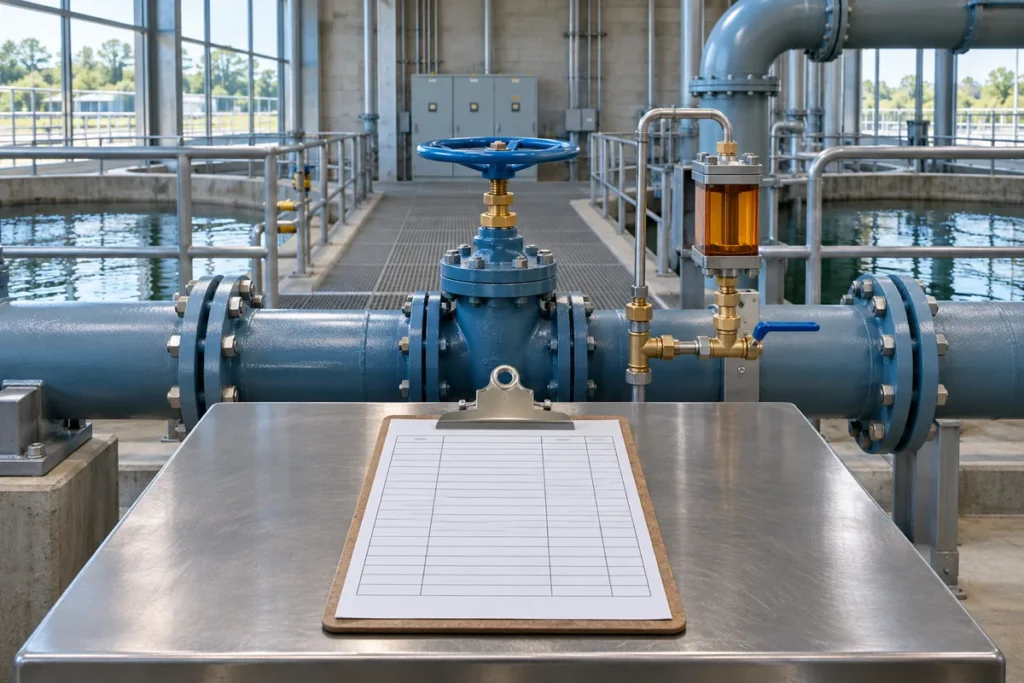
A shift ends with an empty box in the record. It might mean a result is still pending, a value was never entered, or the note belongs to a different item. The next person needs to know which of those possibilities is confirmed. That small distinction is a good way to explore the attention to detail required in water and wastewater operations.
This guide uses US occupation descriptions and a fictional record you can review on paper. You will practise writing a short handoff that preserves what is known, who said it and what still needs checking.
What water and wastewater operators do
Drinking-water treatment and wastewater treatment serve different purposes. One prepares water for distribution to customers. The other treats used water before it can be released or reused. In both settings, US operators may monitor equipment, record observations and take or test samples. At a smaller facility, one operator may cover a wider mix of duties. A larger facility may divide those duties among several people on the same shift.
Some vacancies involve indoor monitoring as well as outdoor rounds or physically demanding work. Plants may operate around the clock, so nights, weekends and on-call duties are worth checking before you apply. Ask the employer to describe one trainee’s shift, including which tasks happen at a desk, which happen on site and which are supervised.
Try a four-entry shift record
Imagine that you are checking the handoff notes at a fictional training desk. The letters are invented reference labels. You have no readings, operating procedures or site records. The exercise is about the accuracy of a message you pass to a colleague.
- 14:10, record A. The shift log says A was collected and handed to the laboratory. Its result field is blank.
- 14:35, record A. A laboratory message acknowledges receipt of A and says the result is pending.
- 14:42, record B. A second message says “result available” and explicitly names B. The message does not mention A.
- 14:55, label unclear. A handwritten note says “repeat requested.” It gives no reference label or author.
Before reading the example below, write three sentences. Say what you can report about A, what belongs only to B and what must be clarified about the handwritten note. Then write one question you could ask the person responsible for the handoff.
Read a worked handoff
The laboratory acknowledged receipt of A at 14:35 and said its result was pending. The 14:42 message names B, so the available result is recorded against B. The 14:55 note requests a repeat, but its reference and author are unknown.
A focused question would be, “Which record does the 14:55 note refer to, and who made the request?” A blank result field alone leaves several possibilities open. The laboratory message narrows those possibilities at a known time. Writing “A was pending as of 14:35” gives the next person something they can verify or update without assuming the status is still current.
Try rewriting your handoff without the event times. Would a colleague still know which update came first? Put the times back, then see whether you can keep the message short. That trade-off between brevity and traceability is the part of the exercise worth taking to a career conversation.
Use an actual vacancy to check the route in
The US Bureau of Labor Statistics describes a high school diploma or equivalent and supervised on-the-job training as typical. A state license is usually required, and requirements vary. Some workers meet licensing requirements during early employment. A specific vacancy may still require an existing credential before the start date.
- Ask about the first month. Which duties does a trainee observe, and which can they perform with supervision?
- Check the credential with the state authority. Write down the exact credential named in the vacancy, then check whether the employer requires it at hiring or supports working toward it after hire.
- Check the schedule in concrete terms. If the posting says “rotating shifts,” ask for an example rotation and how often trainees work weekends or are on call.
Keep the vacancy title, location and one unanswered question together. If you enjoyed working through the record but want to compare other kinds of environmental work, use the environmental careers guide to investigate the day-to-day duties behind another job title.
Sources and scope
- US Bureau of Labor Statistics: Water and Wastewater Treatment Plant and System Operators supports the US duties, working conditions, schedules and typical entry routes.
- O*NET OnLine: Water and Wastewater Treatment Plant and System Operators supports recording observations and test information as examples of US job tasks.
The shift record and worked response are fictional. For job-specific training, licensing and working conditions, use the vacancy, the employer and the relevant state authority.
AI-assisted Career360 editorial guide. General information for career exploration.