Healthcare careers
Explore sterile processing careers with a record handoff
Try a fictional record handoff, then compare employer training, course placements and the certification timeline before paying for a route into US sterile processing.
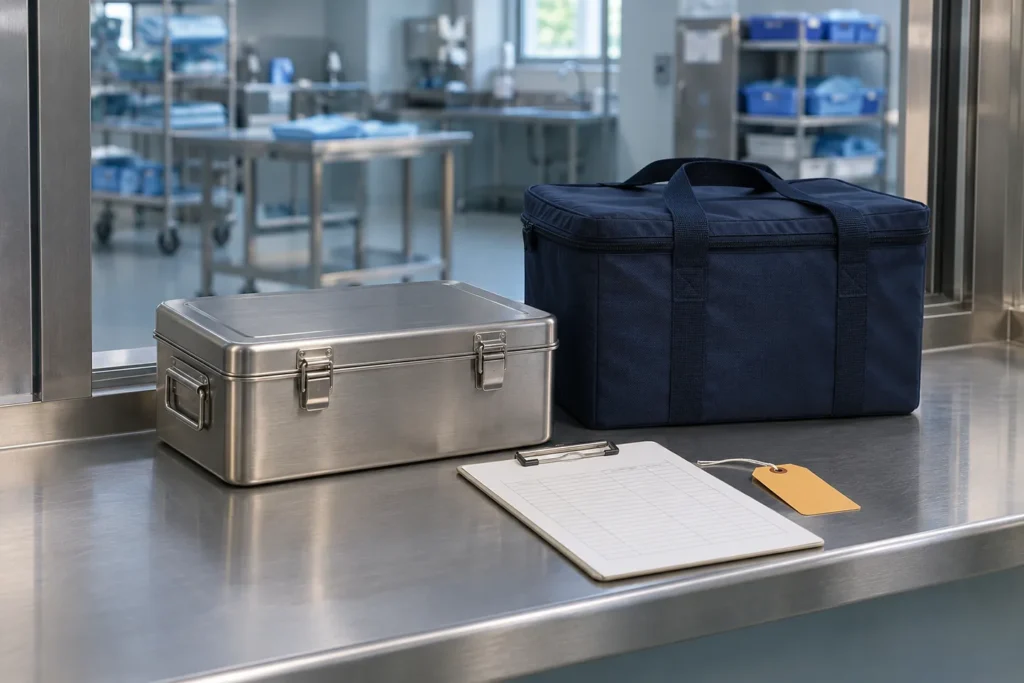
If you have worked in stock control, order fulfilment or another job where records had to match what moved, you already have a useful question to bring to sterile processing. How does this team know which item is ready, where it belongs and who can confirm its status? The answer gives you a better feel for the work than a job title or a course description alone.
Look for the work behind the title
In the United States, O*NET lists titles such as central sterile technician under Medical Equipment Preparers. Its wider occupation profile includes organising instrument trays and keeping records. An employer can tell you how its department divides preparation, documentation and delivery across roles and shifts. Ask what a new employee observes first and how the supervisor decides that they are ready to work independently.
Try writing a two-sentence handoff
You are reading an invented handoff in a training exercise. The collection request lists practice box SP-18 for the north desk at 14:15. The staging sheet shows SP-81 beside the same request. A colleague says, “The box at the desk is probably the right one.” The status field is blank. Write what the next person needs to check and what remains unconfirmed.
See a worked handoff
“The north desk request for 14:15 lists SP-18, and the staging sheet lists SP-81. The item and its status still need to be confirmed in the department’s record by the colleague responsible for the request.” The message preserves both identifiers and gives the next person a specific check. It leaves confirmation with the authorised team. This is a communication exercise with fictional identifiers.
For an interview, look for a real example from your own work where you spotted a record mismatch, checked who owned it and recorded the answer. Explain what you personally did and how the next person knew the matter was resolved.
Compare the job, the course and the credential separately
Employer. A Mayo Clinic advert for Rochester, Minnesota dated 12 November 2026 described on-the-job training and an 18-month deadline after hire for CRCST certification. It also said the employer covered exam costs for that post. Treat this as a dated example of what an employer can specify. Ask your employer which credential it accepts, when its deadline starts and which costs it covers.
Training provider. Before paying for a course, ask whether supervised experience is arranged, what happens if placements fill up, and which costs are separate from tuition. Ask who confirms the hours and whether the department is able to sign the credential body’s documentation.
Credential body. The Healthcare Sterile Processing Association’s CRCST guidance requires 400 hours of hands-on experience and offers a provisional route. Its normal period to submit experience documentation after passing the exam provisionally is six months. An employer’s deadline and the credential body’s documentation window are measured from different events. Put both dates in your plan and verify them before booking an exam or committing money to a course.
Make one check before you commit
Find two employer postings using titles from the occupation profile. For each, record the credential requested, the deadline, whether supervised experience is arranged, and who pays the exam fee. Mark anything the advert leaves open. Turn the first unanswered item into a specific question. If you are comparing course offers, use the Career360 course comparison questions alongside that note.
Sources and scope. US occupation evidence, one dated Minnesota employer example and one credential body’s published route. Check current employer, credential and local requirements for the place where you intend to work. Career360 developed the fictional exercise with AI assistance.